
“Mariupol: The Path of Memory and Dream” in Strasbourg
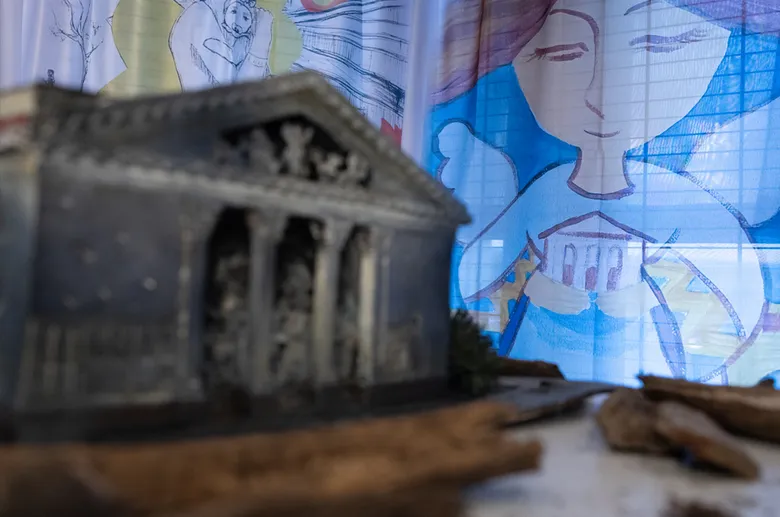
As part of the presentation of the global human rights initiative Mariupol Justice in Strasbourg this week, a section of the exhibition “The Path of Memory and Dream” was presented at the Council of Europe.
A place where major international decisions are usually made was, for a time, transformed into a different kind of space. Here, the exhibition is not seen as a standalone cultural event, but as part of a broader advocacy effort.
Children’s drawings on sail-like canvases, created after surviving occupation. The image of the Drama Theatre, destroyed with people inside. A video installation showing what the city once was—and what it became.
Within the walls of one of Europe’s highest-level institutions, the exhibition works differently than in a museum. It enters the space of political and legal discourse—as a reminder of crimes, accountability, and the decisions that must be made in response to the brutal destruction of a city in 21st-century Europe.
For reference, “Mariupol: The Path of Memory and Dream” was first presented on February 24 this year in Gdańsk. The project was created by Ukrainian director and cultural figure Vladyslav Troitskyi. The exhibition was produced in collaboration between the GOGOLFEST team and the Mariupol City Council, with support from the Rinat Akhmetov Foundation and international partners.
The Strasbourg installation combines artistic and documentary elements, including a model of the destroyed Mariupol Drama Theatre created by artist Albert-Leiser Feldman as part of his “Mirages of Ruins” series.
READ ALSO:
A pilot European case for justice: Mariupol Justice presented in Strasbourg

“By sharing our stories, we remind Europe that we exist.” Mariupol resident Illia Matviienko testified at the Council of Europe